


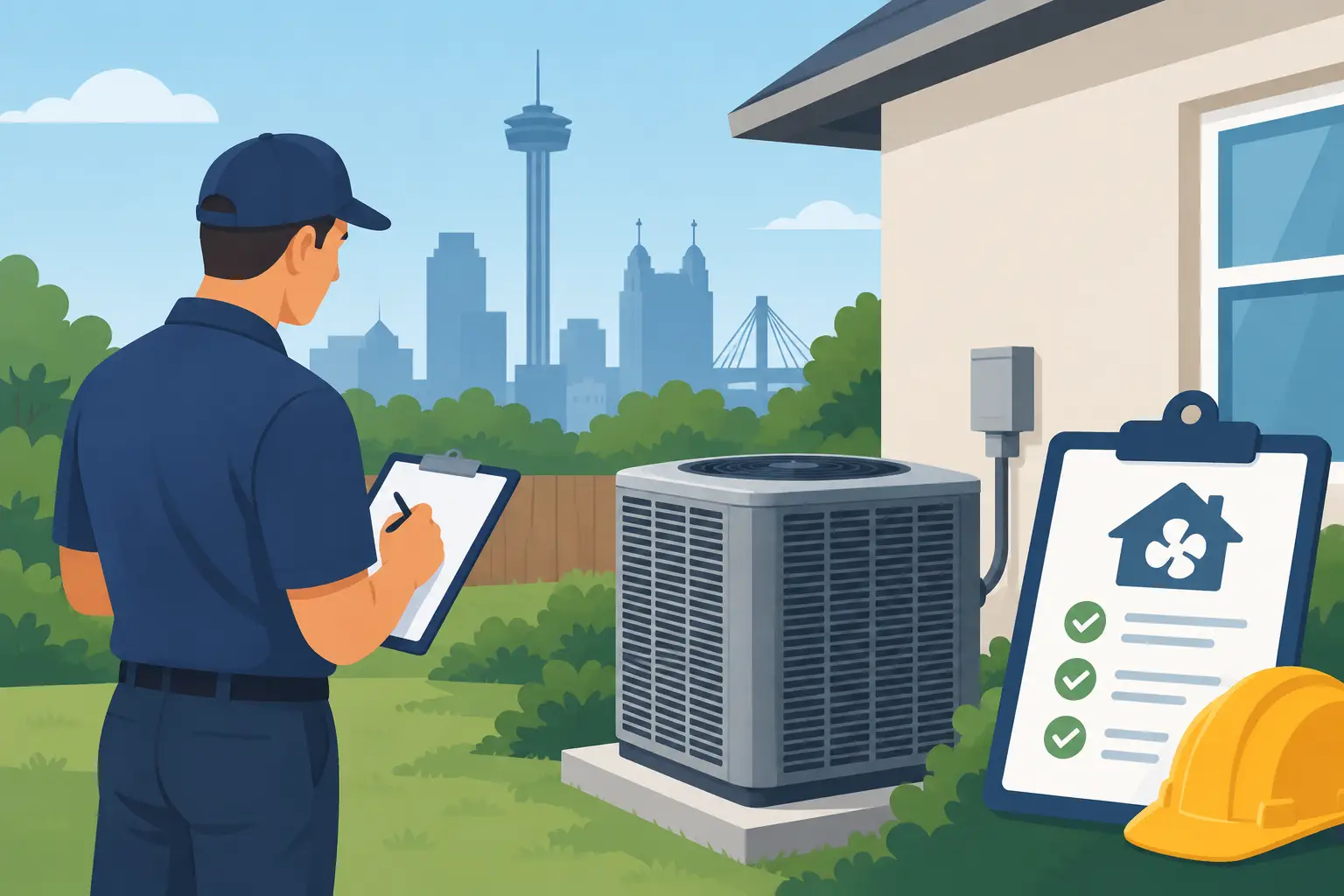
San Antonio AC Permit Guide for Homeowners
When your AC quits during a San Antonio summer, getting cool air back is the priority. But if the repair turns into a full system replacement, major equipment change, or new installation, permits may be part of the job. This San Antonio AC permit guide explains what homeowners, property managers, and business owners should know before work begins.
The short version is simple: routine service and many repairs usually do not require a permit, while replacing equipment or altering electrical, gas, ductwork, or drainage components often can. Requirements depend on the scope of work, the property location, and the local authority that oversees the permit.
When an AC Permit May Be Required in San Antonio
A permit is generally tied to work that changes a building system, not a basic maintenance visit. Replacing a complete central air conditioning system is commonly the type of project that requires permitting and an inspection. The same may apply when an HVAC project includes a new furnace, air handler, condenser, refrigerant line set, dedicated electrical circuit, disconnect, gas connection, duct modifications, or condensate drain changes.
For example, replacing an outdoor condenser with a similar unit is not always as straightforward as it sounds. If the job requires electrical upgrades, changes to equipment sizing, or code-related corrections, it may fall into permit territory. A qualified HVAC contractor should review the whole installation, not just the failed part.
Smaller jobs are different. Seasonal tune-ups, filter changes, thermostat replacements, capacitor replacements, cleaning a drain line, and many straightforward repairs generally do not involve a building permit. Still, there are exceptions. A repair that exposes unsafe wiring, an improperly installed disconnect, or a gas issue may require corrective work beyond the original service call.
Why the Permit Process Protects Your Home
Permits can feel like one more delay when your house is hot. In reality, they are there to confirm that major work meets safety and building standards. HVAC equipment affects more than indoor temperature. It can involve electrical safety, proper drainage, ventilation, refrigerant handling, structural support, and, in some homes, gas-fired heating equipment.
An inspection can help catch problems that are easy to miss after installation. Common examples include an incorrectly sized breaker, missing equipment clearance, an improperly trapped drain line, poor attic access, or a unit that was installed without enough room for future service. These issues can lead to water damage, unreliable performance, higher energy bills, or unsafe conditions.
Permitted work also creates a record that can be useful later. If you sell a home, make an insurance claim, manage a rental property, or need to document building improvements, having properly completed work can reduce questions. It is not a guarantee against every future problem, but it shows the project was handled through the proper local process.
Who Pulls the HVAC Permit?
For most professionally installed residential and commercial HVAC projects, the contractor handles the permit process. That is usually the smoothest option because the contractor understands the scope of work, equipment details, licensing requirements, and inspection steps.
Before approving an estimate, ask who will obtain the permit and whether the cost is included in the quote. An honest contractor should be clear about this from the start. If a permit is needed, the estimate should explain whether permit fees are included, what work is being permitted, and what happens if the inspector requests a correction.
Homeowners can sometimes take responsibility for permits on work they perform themselves, but this can create added risk. HVAC installations involve code requirements that are not always obvious, and manufacturer instructions must also be followed. For rental homes, multifamily properties, and commercial buildings, the rules and responsible parties can be more complicated. Professional installation is often the practical choice.
What to Expect From the San Antonio AC Permit Process
The details vary by project, but the process usually follows a predictable path. First, the HVAC contractor evaluates the existing system and determines whether replacement, repair, or additional work is needed. Proper sizing matters here. Installing a larger unit is not automatically better. An oversized system may cool too quickly, remove less humidity, cycle on and off more often, and wear out sooner.
Next, the contractor submits the required permit information to the appropriate local jurisdiction. San Antonio-area properties may fall under different permitting authorities depending on whether they are inside city limits or in a surrounding municipality or unincorporated area. This is why a local contractor should confirm the property address before making promises about permit requirements.
Once the permit is in place, the installation can move forward. After the work is completed, an inspection may be scheduled. The inspector may review the equipment installation, electrical disconnect, breaker protection, drain setup, refrigerant piping, attic or closet access, and other applicable items. If something needs adjustment, a dependable contractor should correct it and arrange any required follow-up.
For a standard replacement, this process often does not prevent same-day or next-day service. If your system has failed in extreme heat, a contractor can explain the realistic timeline and help you make the safest, fastest plan. Emergency comfort needs matter, but skipping necessary steps can create more trouble later.
Questions to Ask Before Replacing Your AC
A clear conversation upfront prevents surprises. You do not need a technical background to ask the right questions. Start by asking whether the proposed work requires a permit for your specific address. Then ask whether the price includes permit fees, inspections, electrical work, and any code corrections that may be required.
You should also ask whether the replacement equipment has been sized for your home or business. A contractor should consider square footage, insulation, window exposure, duct condition, occupancy, and other factors instead of simply matching the old unit. Older equipment may have been oversized or undersized from the beginning.
For commercial properties, ask how the installation will affect business hours, customer access, rooftop access, and downtime. A restaurant, office, retail space, or rental property may need a different work plan than a single-family home. The right approach balances code compliance, occupant comfort, and the need to keep operations moving.
Permit Red Flags Worth Taking Seriously
Low pricing is appealing, especially when an AC replacement was not in the budget. But a quote that is far below others may leave out necessary work. Be careful if a contractor dismisses permits without reviewing the job, refuses to provide license information, pressures you to pay in full before work begins, or cannot explain what is included in the installation.
Another concern is vague language around inspections. A contractor should not promise that permits are never needed in San Antonio. Requirements depend on the project and jurisdiction. What matters is whether the contractor has looked at the actual scope of work and is willing to follow the rules that apply to your property.
The lowest estimate can become the most expensive choice if it leaves you with failed inspections, uncorrected safety issues, damaged ceilings from drainage problems, or equipment that does not perform as promised. Affordable service should still be licensed, straightforward, and done correctly.
Common Permit Questions
Does a simple AC repair need a permit?
Most ordinary repairs and maintenance calls do not. Replacing parts, cleaning coils, repairing a drain line, or installing a thermostat usually differs from replacing or altering an HVAC system. If the repair expands into electrical, gas, or major equipment work, the answer may change.
Does an AC replacement always need a permit?
Not every situation is identical, but full system replacements commonly require permitting. Your contractor should verify the requirement with the authority that serves your address rather than relying on assumptions.
Can I sell my house if the AC was replaced without a permit?
You may still be able to sell, but unpermitted work can create questions during inspections, appraisals, buyer negotiations, or insurance review. Addressing the issue may require documentation, corrections, or a later permit process. It is much easier to handle the details correctly before installation.
A failed AC is stressful enough without uncertainty about permits, pricing, or inspection requirements. Choose a licensed local HVAC professional who explains the work in plain language and treats your home or business with care. AZ Tech America is ready to provide an honest estimate and dependable help when your comfort cannot wait.


Comments